You cleared the aptitude test.
You performed well in the technical round.
Then came the HR interview.
And that’s where many candidates lose the opportunity.
Contrary to popular belief, HR interviews are not just a formality. In many cases, the HR round becomes the deciding factor between a job offer and a rejection.
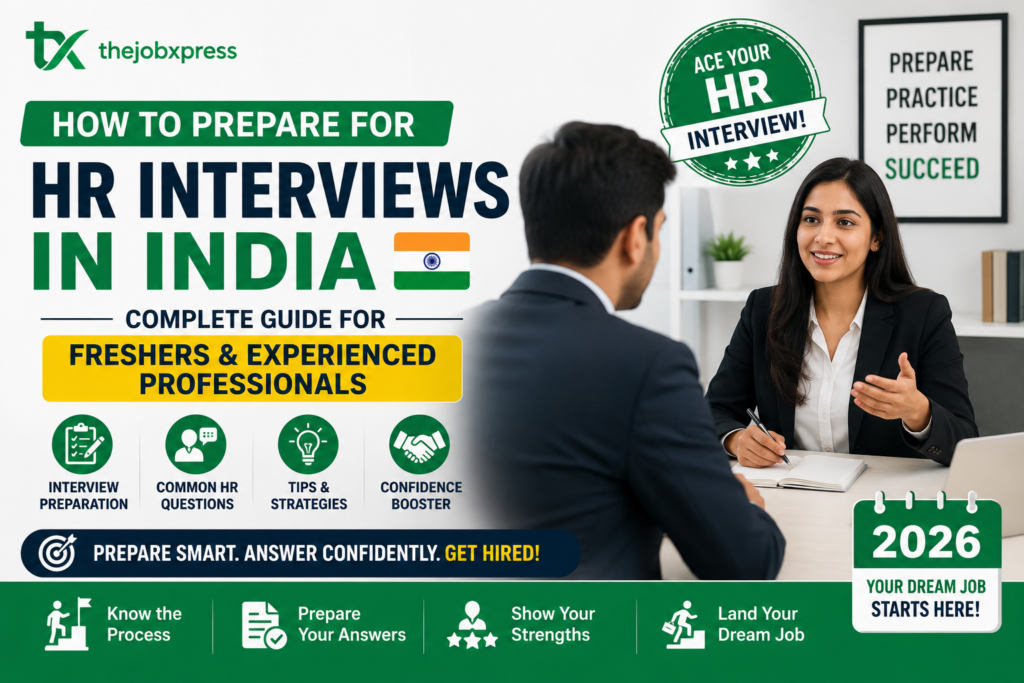
Recruiters use HR interviews to assess your communication skills, confidence, personality, attitude, cultural fit, career goals, and professionalism. Whether you’re a fresher attending campus placements or an experienced professional seeking a career switch, preparing for HR interviews is crucial.
In this comprehensive guide, you’ll learn how to prepare for HR interviews in India, common HR questions, proven answering strategies, and expert tips to increase your chances of getting selected.
Why HR Interviews Are Important
Many candidates focus entirely on technical preparation and underestimate the HR round.
However, HR professionals evaluate:
- Communication skills
- Confidence
- Professional attitude
- Teamwork ability
- Career aspirations
- Cultural fit
- Salary expectations
- Stability and commitment
A technically strong candidate can still be rejected if they fail to create a positive impression during the HR interview.
What HR Recruiters Look For
Before discussing interview questions, it’s important to understand what recruiters actually want.
HR managers typically ask themselves:
- Can this candidate work well with others?
- Is the candidate professional?
- Does the candidate have realistic expectations?
- Will the candidate stay with the company?
- Does the candidate align with our company culture?
Your answers should help address these concerns.
Common HR Interview Questions in India
1. Tell Me About Yourself
This is usually the first question in almost every HR interview.
Many candidates make the mistake of narrating their life story.
Instead, structure your answer around:
- Educational background
- Professional experience
- Key skills
- Career goals
Example for Freshers
“I recently completed my B.Tech in Computer Science and developed strong skills in Python, SQL, and web development through academic projects and internships. I’m passionate about technology and excited to begin my career in software development.”
Example for Experienced Professionals
“I have five years of experience in banking operations, specializing in customer relationship management and process improvement. Throughout my career, I’ve focused on enhancing operational efficiency and delivering excellent customer service.”
2. Why Should We Hire You?
This question evaluates your understanding of the role and your confidence.
Focus on:
- Relevant skills
- Achievements
- Learning ability
- Problem-solving mindset
Example:
“My technical skills, willingness to learn, and ability to work collaboratively make me a strong fit for this role. I believe I can contribute effectively while continuing to grow professionally.”
3. What Are Your Strengths?
Choose strengths that align with the job.
Examples:
- Communication skills
- Leadership
- Problem solving
- Adaptability
- Time management
Always support your answer with an example.
4. What Are Your Weaknesses?
This question is not meant to trap you.
Recruiters want to see self-awareness.
Avoid cliché answers such as:
- “I’m a perfectionist.”
- “I work too hard.”
Instead, discuss a genuine area for improvement and explain how you’re addressing it.
Example:
“I used to feel nervous while presenting to large groups. To improve, I started participating in team presentations and public speaking sessions.”
5. Why Do You Want to Work for Our Company?
Research is essential.
Before attending an interview, understand:
- Company products
- Services
- Industry
- Recent achievements
- Culture and values
Candidates who demonstrate genuine interest often leave a stronger impression.
6. Where Do You See Yourself in Five Years?
Recruiters want to understand your ambitions.
A balanced answer should demonstrate:
- Career growth aspirations
- Commitment
- Desire to contribute
Example:
“In five years, I hope to develop strong expertise in my field, take on greater responsibilities, and contribute significantly to organizational success.”
7. Why Are You Leaving Your Current Job?
For experienced professionals, this question is almost guaranteed.
Never criticize your current employer.
Focus on:
- Career growth
- Learning opportunities
- Skill development
- New challenges
Professionalism matters.
HR Interview Preparation Strategy
Step 1: Understand the Job Description
Review:
- Responsibilities
- Required skills
- Preferred qualifications
Align your experiences with the requirements.
Step 2: Research the Company
Visit:
- Company website
- LinkedIn page
- News articles
- Social media profiles
Knowledge demonstrates preparation and enthusiasm.
Step 3: Prepare Your Resume Thoroughly
Every point on your resume is fair game during the interview.
Be prepared to explain:
- Projects
- Certifications
- Achievements
- Career transitions
If it’s on your resume, expect questions about it.
Step 4: Practice Mock Interviews
Mock interviews help improve:
- Confidence
- Communication
- Body language
- Response structure
Recording yourself can reveal areas for improvement.
Body Language Tips for HR Interviews
Communication is more than words.
Pay attention to:
Maintain Eye Contact
Shows confidence and engagement.
Sit Upright
Demonstrates professionalism.
Smile Naturally
Creates a positive impression.
Avoid Fidgeting
Nervous movements can distract interviewers.
Listen Carefully
Avoid interrupting the interviewer.
Strong body language often enhances the effectiveness of your answers.
HR Interview Mistakes to Avoid
Many candidates lose opportunities due to avoidable mistakes.
Arriving Late
Punctuality reflects professionalism.
Speaking Negatively About Previous Employers
Maintain professionalism at all times.
Giving Generic Answers
Tailor responses to the role and company.
Not Asking Questions
At the end of the interview, ask thoughtful questions about:
- Team structure
- Growth opportunities
- Training programs
Lack of Company Research
This is one of the most common reasons candidates perform poorly.
HR Interview Tips for Freshers
Fresh graduates often worry about limited experience.
Remember:
Recruiters don’t expect extensive work history from freshers.
Focus on:
- Projects
- Internships
- Certifications
- Academic achievements
- Learning ability
Demonstrating enthusiasm and adaptability can often outweigh experience.
HR Interview Tips for Experienced Candidates
Experienced professionals should emphasize:
- Achievements
- Leadership experience
- Problem-solving ability
- Business impact
- Career progression
Use measurable accomplishments whenever possible.
Example:
“Reduced customer complaint resolution time by 35% through process improvements.”
Most Important Skills HR Managers Evaluate
Recruiters consistently look for:
| Skill | Importance |
| Communication | Very High |
| Teamwork | Very High |
| Problem Solving | High |
| Adaptability | High |
| Leadership | High |
| Time Management | High |
| Professionalism | Very High |
| Learning Ability | High |
Developing these skills improves performance in both interviews and the workplace.
Final Interview Checklist
Before your interview:
✔ Research the company
✔ Review the job description
✔ Prepare answers to common HR questions
✔ Practice mock interviews
✔ Update your resume
✔ Dress professionally
✔ Carry required documents
✔ Join online interviews early
Preparation builds confidence.
Confidence improves performance.
Performance increases your chances of receiving an offer.
Conclusion
HR interviews play a critical role in the hiring process. While technical skills may help you reach the final stage, communication, professionalism, attitude, and cultural fit often determine whether you receive the job offer.
By researching the company, preparing for common questions, improving your communication skills, and practicing mock interviews, you can significantly increase your chances of success.
Whether you’re attending campus placements, applying for private jobs, IT jobs, banking jobs, or management roles, strong HR interview preparation can be the difference between rejection and a successful career opportunity.
Invest time in preparation today, and you’ll walk into your next HR interview with confidence.
Frequently Asked Questions (FAQ)
What are the most common HR interview questions in India?
Questions such as “Tell me about yourself,” “Why should we hire you?”, “What are your strengths and weaknesses?”, and “Where do you see yourself in five years?” are among the most frequently asked.
How should freshers prepare for HR interviews?
Freshers should focus on communication skills, academic projects, internships, certifications, company research, and mock interview practice.
How long does an HR interview usually last?
Most HR interviews last between 15 and 45 minutes depending on the role and organization.
Is the HR interview round important?
Yes. HR interviews evaluate cultural fit, communication skills, professionalism, and overall suitability for the organization.
What should I wear to an HR interview?
Formal or business professional attire is recommended unless the company specifically indicates otherwise.
How do I answer “Tell me about yourself”?
Provide a concise overview of your education, experience, skills, achievements, and career goals relevant to the role.
What should I do if I don’t know the answer to a question?
Stay calm, be honest, and explain your thought process. Recruiters often appreciate honesty more than guessing.